Electronics development
Every electronic product starts with decisions that set its cost, reliability and schedule: which processor, which power supply, how to protect the inputs and how to pass certification. We make these decisions with you, design the circuit and bring it to a board that works on the bench. The same engineer then writes the firmware that runs on it, so nothing gets lost between hardware and code.
What we do
- Electrical requirements and an architecture document
- Component selection by availability, price and life cycle, including alternates
- Schematic design with documented design calculations
- Power supplies, DC/DC converters, input protection and e-fuses
- High-power circuits and motor control
- Sensor interfaces, precision analog and RF
- Board bring-up, measurements and debugging on the hardware
When to call us
- You have an idea or requirements and need an electronic board
- An existing board runs hot, is noisy, unstable or too expensive to build
- A key component went end-of-life and the board needs a redesign
- Your team is busy and a project must ship on time
What you get
- Complete schematics and source files
- Bill of materials (BOM) with part numbers and alternates
- A design document with the calculations and decisions
- Tested prototype boards and a measurement report
FAQ
Can we start with the specification only, without committing to the whole project?
Yes. Specification is a separate stage with a fixed price. At the end you get an architecture document and a cost estimate, and then decide whether to continue.
Do you also work on boards designed by someone else?
Yes. Design reviews, debugging and upgrading existing boards are a large part of our work.
// Projects
Examples from the field
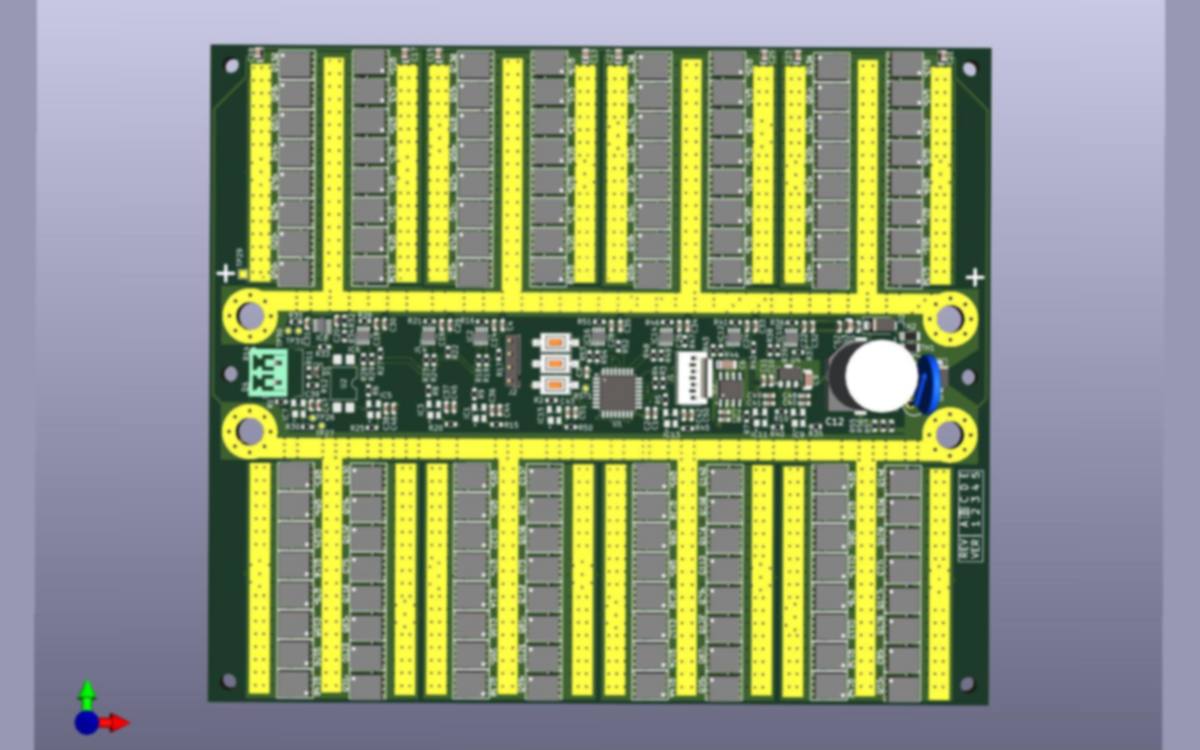
Industrial · High power
Multi-channel spot-welding controller
- Challenge
- Deliver pulses of up to 1500 A with precise timing, without burning parts on every pulse.
1500AMaximum pulse current
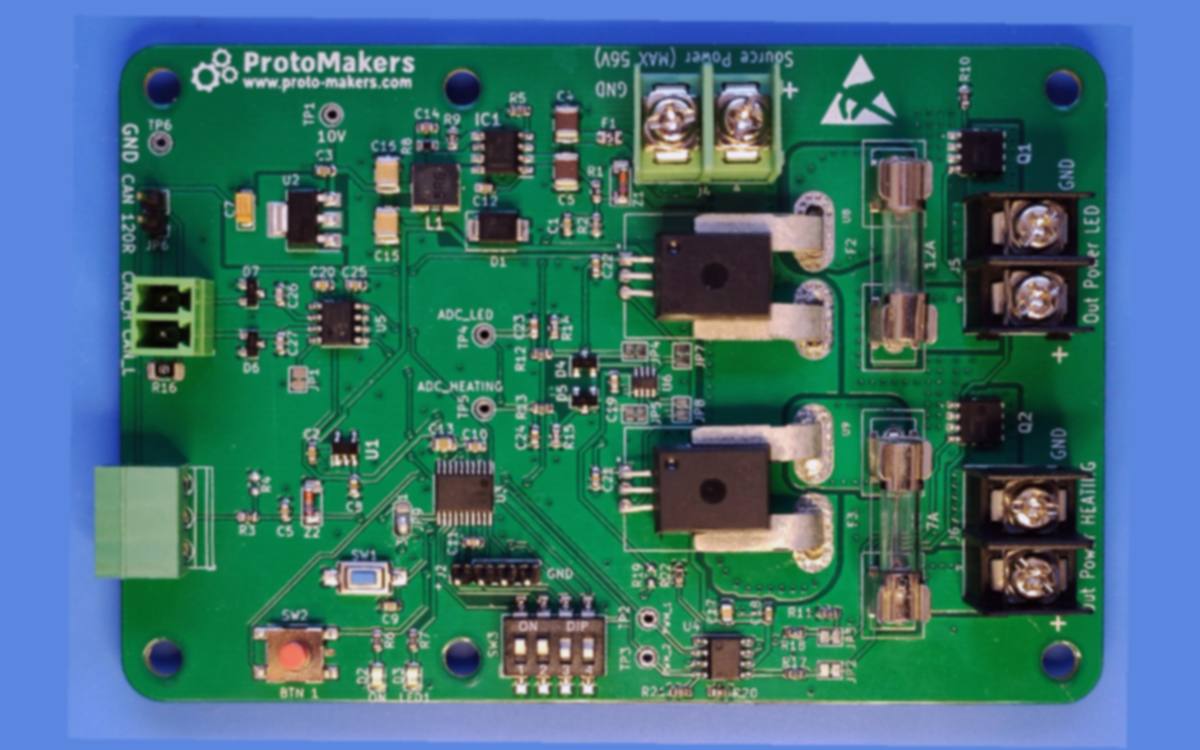
Industrial · Power · CAN
Power management board with CAN
- Challenge
- Control two heavy loads, lighting and heating, from an input of up to 56 V, and protect the board from short circuits and overload.
56VMaximum input voltage
Medical · Real-time control
Medical · Real-time control
Ultrasonic medical nebulizer
- Challenge
- The piezo element's resonant frequency shifts with heat during treatment. If the controller doesn't follow it, the mist weakens or disappears.
±25HzTracking accuracy around 173.6 kHz
Have a project on the table?
A free 30-minute intro call, no obligation.