Background
A smoke and heat ventilation system opens windows and roof hatches in a building as soon as a fire is detected, to clear smoke and heat and keep escape routes usable. Day to day, the same system is also used for normal ventilation. Shevtech needed a control board that drives the window motors and connects to all the building's systems.
The challenge
- Reliability in an emergency: when there is a fire, the windows must open. Even during a power outage and even if something else in the system has failed.
- High currents: window and hatch motors draw high current, especially at start-up.
- Many interfaces: the fire-alarm system, emergency buttons in the building, a rain sensor and ventilation systems.
- Logging: after every event you need to know what happened, when, and who operated the system.
What we built
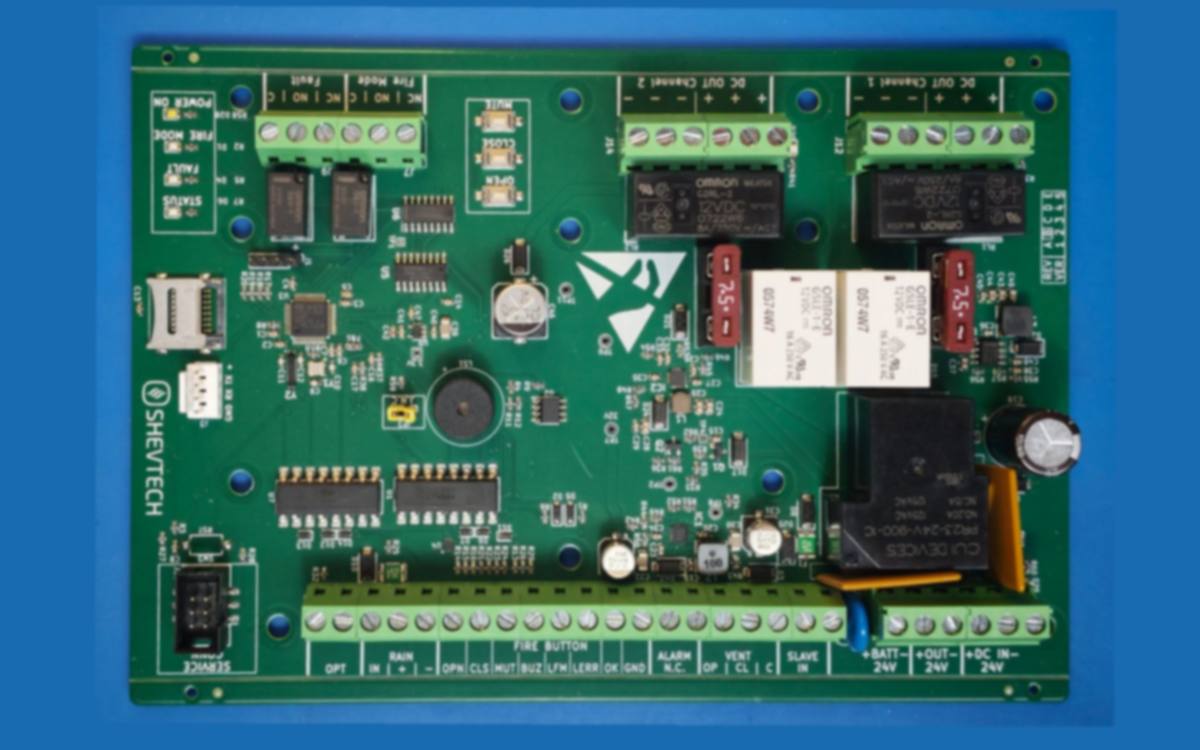
- Two separate 10 A drive channels: each channel drives its own group of windows, with power relays for opening and closing and a fuse per channel.
- Power and backup: 24 V input, 24 V output, and a connection to a 24 V backup battery with a power relay to switch between them.
- Isolated inputs: connections to the fire-alarm system, emergency buttons (open, close, silence and self-test), a rain sensor, ventilation commands and an additional slave controller.
- Status outputs: dry contacts for "fire" and "fault" to connect to building systems.
- Local interface: open, close and silence buttons, status LEDs (power, fire, fault, status) and a buzzer.
- SD card logging: every action, command and fault is saved with a timestamp, for review after an event and for maintenance.
- Firmware: fire and ventilation logic with priorities, for example closing in rain only when there is no fire state, fault monitoring and a service connector for diagnostics.
The result
One controller that manages smoke clearing and ventilation in a building, keeps working during a power outage, and keeps a full log of everything that happened.
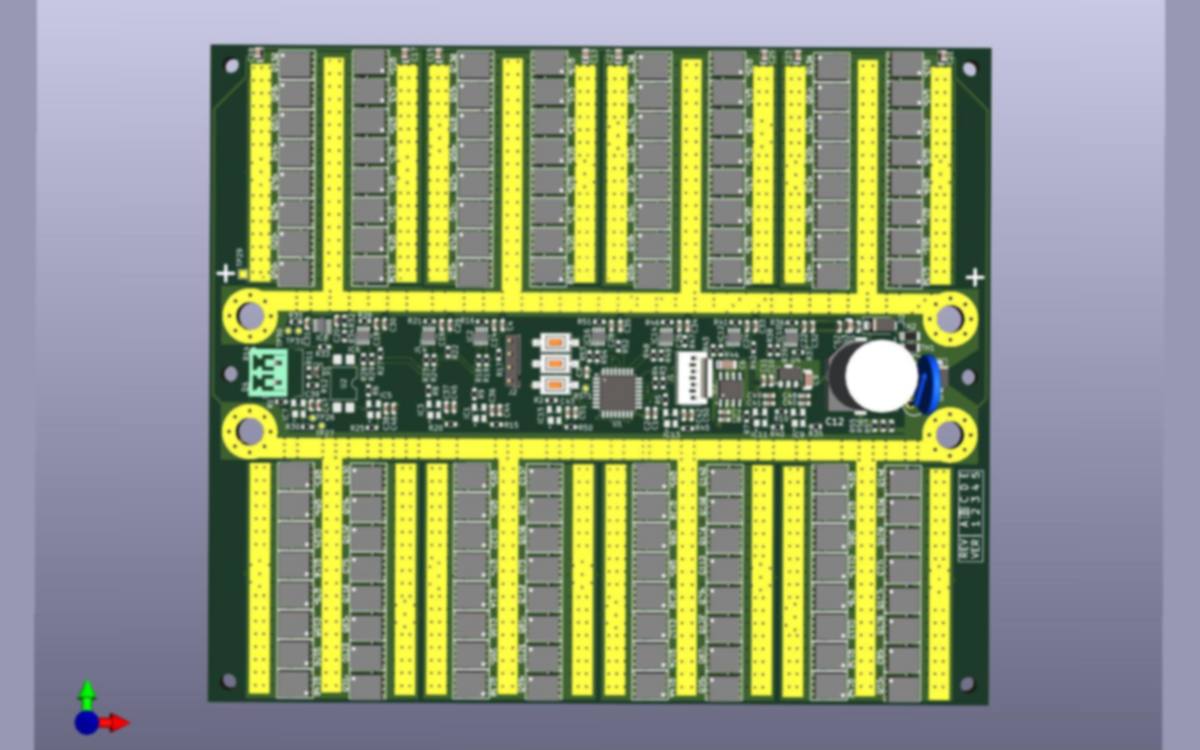
For large buildings we also developed a version with six 10 A drive channels.