Background
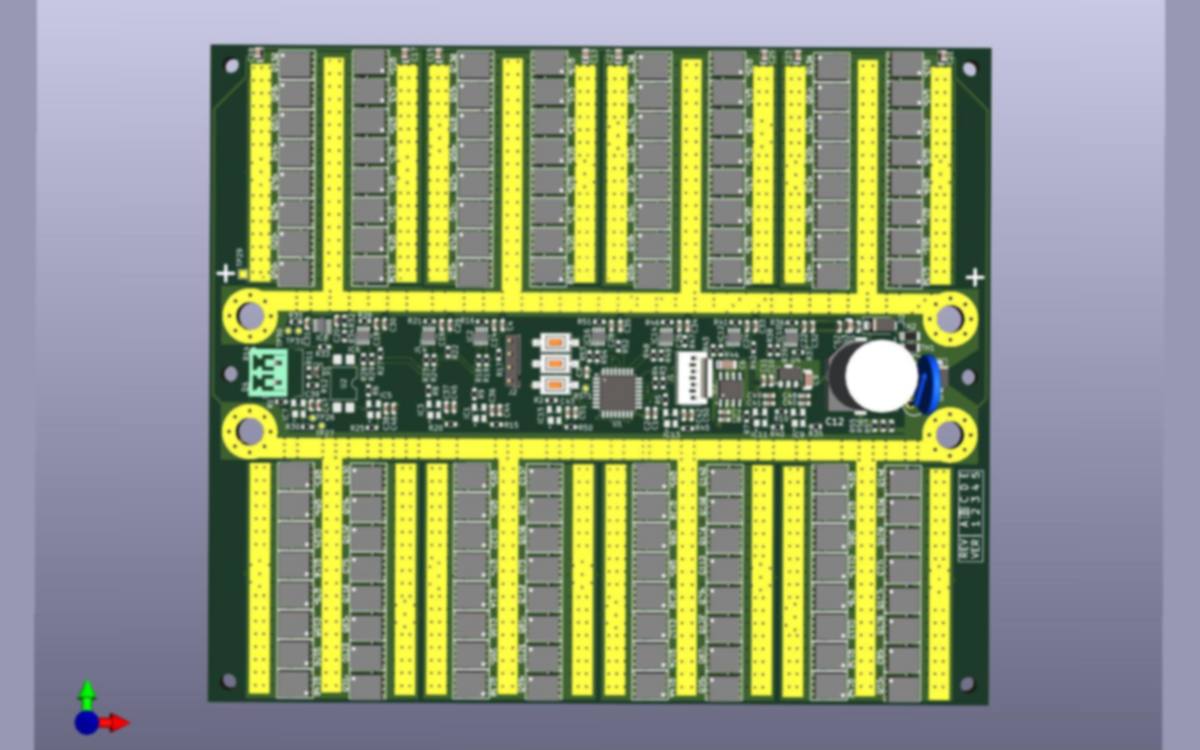
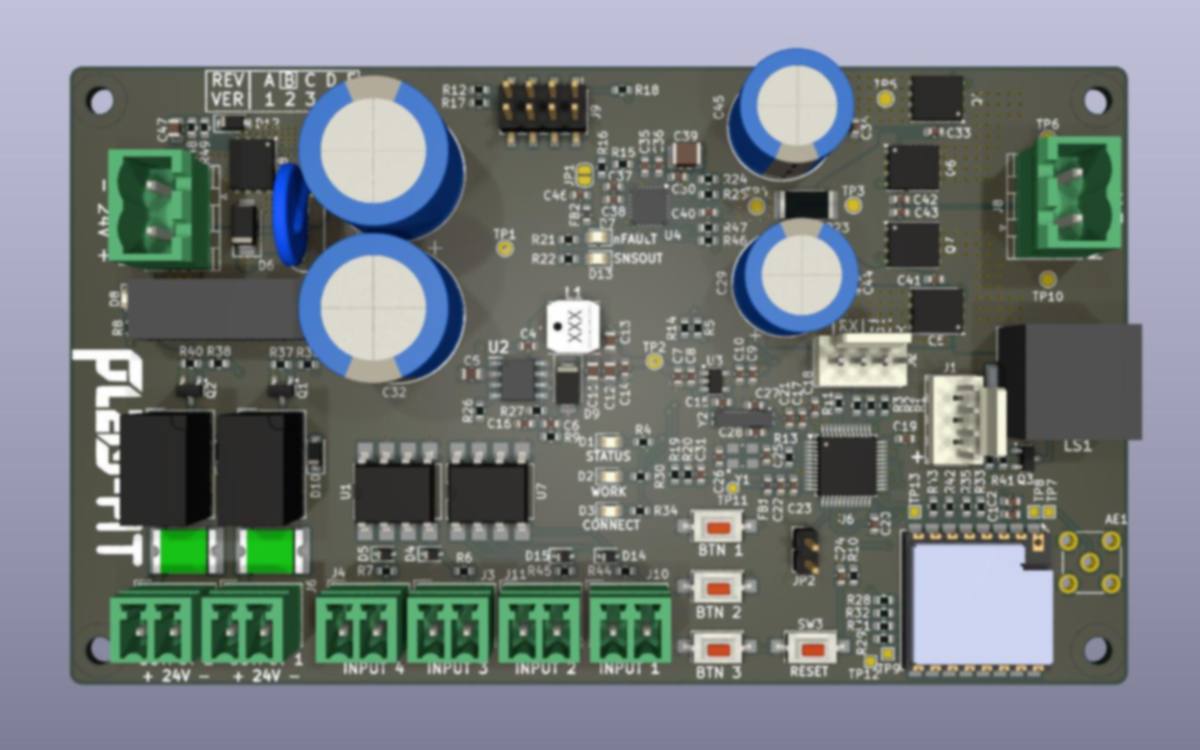
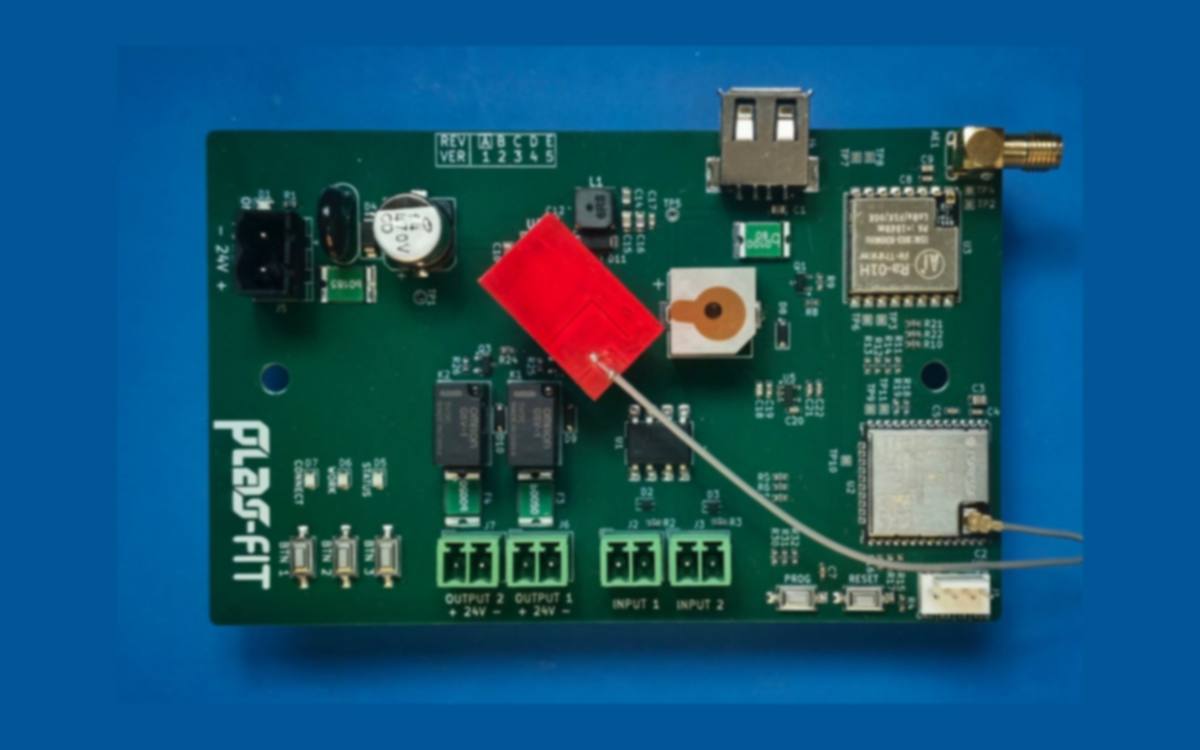
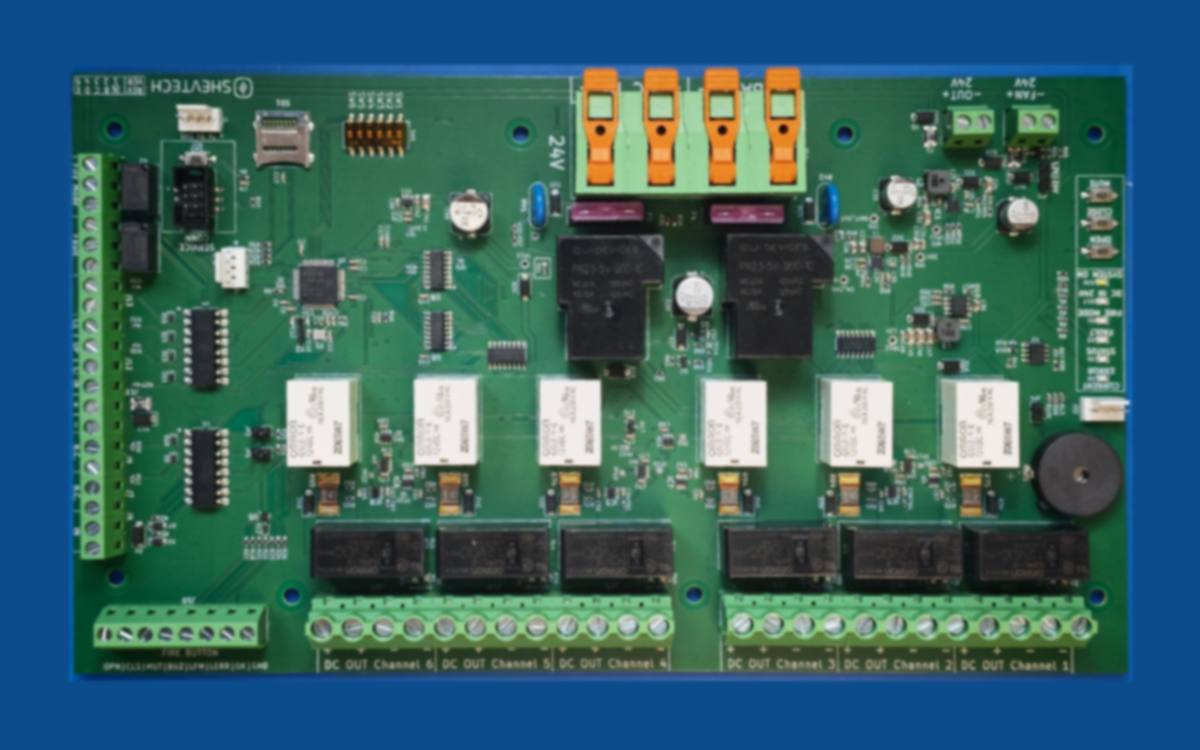
This is the large version of the 2-channel smoke vent controller we developed for Shevtech. Large buildings, such as shopping centers, parking garages and halls, have many more smoke vent windows and hatches, divided into zones. Instead of installing several small controllers, Shevtech wanted one board that manages six groups of motors.
The challenge
- A lot of current at once: six 10 A channels that can all run together in a fire. Both the board's total current and the motor start-up current have to be designed for in advance.
- Reliability in an emergency: when there is a fire, the windows must open. Even during a power outage, and even if one channel or one motor has failed.
- Many interfaces: the fire-alarm system, a firefighter button panel, building systems and ventilation systems.
- Logging: after every event you need to know what happened, when, and on which channel.
What we built
- Six separate 10 A drive channels: each channel has a pair of relays, one that powers the motor and one that sets the direction, open or close. Each channel drives its own group of windows, and a fault on one channel doesn't take down the others.
- Current measurement on every channel: so the controller knows whether the motor is really moving, detects end of travel and stalls, and reports faults.
- Power and backup: a 24 V input and a backup-battery connection, with 20 A power relays to switch between them, fuses and surge protection. Additional 24 V outputs for external equipment and a fan.
- Isolated inputs: connections to the fire-alarm system and building systems.
- Status outputs: "fire" and "fault" dry contacts for the building systems.
- Firefighter button panel: a dedicated connector for an external panel with open, close and silence buttons, a buzzer and status LEDs.
- Local interface: open, close and silence buttons, status LEDs (system on, 24 V, fire mode, fault, status, error and current) and a buzzer.
- Field configuration: DIP switches to configure the controller during installation, without a computer.
- SD card logging: every action, command and fault is saved with a timestamp.
- Firmware: fire and ventilation logic for each of the six channels, fault monitoring and a service connector for diagnostics. The logic and the hardware were designed together, based on the 2-channel version.
The result
One controller that manages smoke clearing and ventilation for a large building in six separate zones, keeps working during a power outage, and keeps a full log of everything that happened.